
Plans for big bang reforms in the GST regime by Diwali, the Putin-Trump summit and S&P upgrading India's sovereign credit rating are likely to instil optimism in the domestic equity market in the week ahead, analysts said. Besides, trends in global markets and the trading activity of foreign investors would also impact domestic investors' sentiment.

The Indian government has expressed its disagreement with the IMF staff's 'baseline' assumption that the 50 per cent US tariffs on its goods exports 'would remain in place indefinitely', based on which the staff pegged the country's GDP growth at 6.6 per cent this year, and pared its 2026-27 projection by 20 basis points to 6.2 per cent.

Maruti, IndusInd Bank, Bajaj Finserv, Eternal, Mahindra & Mahindra, Tata Steel, Kotak Mahindra Bank, Titan, HDFC Bank, and NTPC were among the other major gainers. Bharti Airtel and Sun Pharma were the laggards.

Global rating Moody's on Monday affirmed India's long-term local and foreign-currency issuer ratings and the local-currency senior unsecured rating at 'Baa3' with a 'stable' outlook on the back of robust economic growth and sound external position. The rating agency also affirmed India's other short-term local-currency rating at P-3.

After a record-breaking year, India's automobile industry is entering 2026 on a relatively strong footing, with sales growth expected in the 6-8 per cent range. The outlook is underpinned by policy support, including GST rationalisation, easing monetary conditions, and income tax relief, which together are likely to improve affordability and sustain consumer demand across vehicle segments.

Gold prices on Tuesday surged Rs 723 to touch an all-time high of Rs 110,312 per 10 grams in the domestic futures market, tracking strong global cues amid growing expectations of a US Federal Reserve interest rate cut next week. Traders said weak US labour market data has strengthened the case for monetary policy easing, putting pressure on the dollar and boosting demand for the safe-haven asset.

India's housing market has remained resilient this festival season (Dussehra-Diwali period), despite global macroeconomic challenges, tech-sector layoffs, and affordability pressures, with developers reporting 10-25 per cent year-on-year (Y-o-Y) rise in home sales across major cities.
From the Sensex firms, Tata Steel, Eternal, Tech Mahindra, Maruti, Mahindra & Mahindra, Infosys, IndusInd Bank, HCL Tech, Tata Consultancy Services and Bharti Airtel were the major gainers. Telecom operator Bharti Airtel climbed nearly 1 per cent after it posted about a five-fold jump in consolidated net profit to Rs 11,022 crore in the March 2025 quarter, mainly due to the tariff hike impact and one-time gain on tax benefits. However, Asian Paints, Tata Motors, Kotak Mahindra Bank, NTPC and Power Grid were among the laggards.

The Asian Development Bank (ADB) on Wednesday lowered India's growth forecast for FY26 to 6.5 per cent from 6.7 per cent on account of trade uncertainty and higher US tariffs that are expected to impact exports and investment. Despite the downward revision from the April 2025 Asian Development Outlook (ADO), India remains one of the fastest-growing major economies in the world.

Reserve Bank of India (RBI)Governor Sanjay Malhotra on Friday said it was not the regulator's job to take decisions for bank boards, speaking in the context of the wide range of enabling reforms announced for lenders during the October monetary policy review, and emphasised that financial stability remained the regulator's focus.

Gold and silver prices are poised to maintain their record-setting rally in the coming week as investors focus on global inflation data and key macroeconomic indicators that shape central bank policy paths, analysts said.

'Calibrated depreciation will help rebalance external fundamentals, offset some of the tariff differentials with competitors, improve the competitiveness of domestic substitutes vis-a-vis Chinese imports, and contribute to the easing of financial conditions at a time when the inflation rate is unusually low,' explains Sajjid Z Chinoy, head of Asia Economics at JP Morgan.

'Maybe he was wrong, but they believed he genuinely meant what he said.'

Among Sensex scrips, Bharti Airtel, Titan, NTPC, State Bank of India, ITC, Tata Steel, Mahindra & Mahindra and Tata Motors were the major laggards. Adani Ports, Infosys, Axis Bank, HCL Technologies, Tech Mahindra and IndusInd Bank were among the gainers.

Reserve Bank on Wednesday cut India's growth forecast to 6.5 per cent from 6.7 per cent estimated earlier for the current financial year on account of impact of global trade and policy uncertainties. Prospects of agriculture sector remain bright on the back of healthy reservoir levels and robust crop production in 2025-26, RBI Governor Sanjay Malhotra said while unveiling the outcome of the first bi-monthly Monetary Policy Committee meeting for the current financial year.

Retail inflation eased to a nearly six-year low of 3.16 per cent in April mainly due to subdued prices of vegetables, fruits, pulses, and other protein-rich items, creating enough room for the Reserve Bank to go for another round of rate cut in the June monetary policy review. The Consumer Price Index (CPI) based inflation was 3.34 per cent in March and 4.83 per cent in April 2024. It was 3.15 per cent in July 2019.
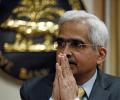
Uncertainty is emerging as the only certainty, said RBI Governor Shaktikanta Das as he emphasised on continued policy support at the December MPC meet during which members expressed concerns over spread of the Omicron variant of coronavirus, as per the minutes of the rate-setting panel released on Wednesday. After three days of deliberations, the six members of the Monetary Policy Committee (MPC) on December 8 unanimously voted for status quo on policy rates for the ninth consecutive time. At the meeting, the RBI Governor said risks stalking the global economy have amplified with rapid spread of the virus mutations, including the Omicron variant, leading to countries scrambling for restrictions.
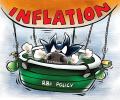
The Reserve Bank of India (RBI) has projected retail inflation at 4.2 percent for the next financial year beginning April while retaining the forecast for 2024-25 at 4.8 percent. The central bank attributed the expected easing of inflation to good kharif production, winter-easing in vegetable prices and favorable rabi crop prospects. However, the RBI also noted that continued uncertainty in global financial markets coupled with volatility in energy prices and adverse weather events presents upside risks to the inflation trajectory.

RBI's interest rate decision, macroeconomic data, global trends and trading activity of foreign investors are the crucial factors to drive equity markets in a holiday-shortened week ahead, analysts said. Markets would remain closed on Monday for Gandhi Jayanti. "While global cues will continue to dictate trends in local markets, focus will shift to RBI's monetary policy announcement on Friday. "Although the market is expecting a status quo on interest rates, global concerns like rising US dollar index and bond yields coupled with surging crude oil prices continue to weigh on investors' minds.

Equity markets this week will turn their focus on the RBI's interest rate decision, Q1 earnings from several blue-chip firms and tariff-related news for further cues, analysts said. Moreover, trading activity of foreign investors and trends in global equity markets will also drive investors' sentiment.

'The outlook for the next Samvat is more constructive, as many of the earlier drags are gradually becoming supports.'
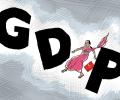
The Reserve Bank of India on Friday slashed the growth projection to 7 per cent for the current fiscal from the earlier forecast of 7.2 per cent, citing aggressive tightening of monetary policies globally and moderation in demand. Unveiling the fifth monetary policy for this fiscal, RBI Governor Shaktikanta Das said the central bank remains committed to price stability to put the country on the sustained path of growth.
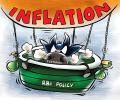
Amid a debate on the basis of a monetary policy stance, one may be curious enough to know how non-food retail inflation has behaved over the years in India. Let the eager souls catch a glimpse of facts. In the past 10 years, non-food inflation came down below 4 per cent on two occasions - pre-Covid period of 2019-20 and now in the first four months of the current financial year (FY25).

'Only four or five original companies remain; the rest have been replaced every decade as sectors evolve or leadership shifts.' 'Companies that fail to adapt -- like many textile mills from the 1970s and shipping firms from the 1980s -- disappear.' 'Benchmark indices reward those who reinvent themselves in line with economic demands.'

S&P Global Ratings on Tuesday said the Indian economy is set for "resilient growth" in 2025 and projected inflation pressure to recede which will lead to "modest" easing of the monetary policy by the RBI. In its India outlook for 2025, S&P also retained India's growth forecast for current fiscal at 6.8 per cent, followed by 6.9 per cent growth in 2025-26.

The weakening of inflation, prospects of economic growth, geopolitical uncertainty and comfortable system liquidity may result in the Reserve Bank of India's (RBI) Monetary Policy Committee (MPC) to cut the repo rate by another 25 basis points, opine top economists. They also said the external economic pressures like trade policies and others would require continued RBI's accommodative stance and policy support for the Indian industry to sustain the growth.

Credit quality of Indian corporate is expected to be stable in the second half of the current financial year (H2FY26), supported by easing monetary cycle, and declining inflation, coupled with income-tax relief and rationalisation of the goods and service tax (GST) rates, among others.

Indian economy is in a sweet spot, with a mix of solid growth and moderating inflation, Moody's Ratings said, forecasting a 7.2 per cent GDP growth in the 2024 calendar year and 6.6 per cent in the next. In its Global Macro Outlook 2025-26, the rating agency said the global economy has shown remarkable resilience in bouncing back from supply chain disruptions during the pandemic, an energy and food crisis after the Russia-Ukraine war began, high inflation and consequent monetary policy tightening.

Gold and silver prices are expected to maintain their upward trajectory this week, but may see late profit-booking amid the release of a series of crucial global economic indicators, analysts said. On the economic front, traders will closely monitor the manufacturing/ services PMI data from across regions and the US non-farm payrolls/ employment data along with consumer confidence for the month of September and speeches from several Federal Reserve officials, they added.

India will be the world's third-largest economy by 2028 as it becomes the world's most sought-after consumer market and gains share in global output, driven by macro stability influenced policy and better infrastructure, Morgan Stanley said. From a $3.5 trillion economy in 2023, the Indian economy is projected to expand to $4.7 trillion in 2026, which will make it the fourth largest in the world behind the US, China and Germany.

Wholesale price inflation moderated to 2.31 per cent in January due to the decline in prices of food items especially vegetables, government data released on Friday showed. The Wholesale Price Index (WPI) based inflation was 2.37 per cent in December 2024. It was 0.33 per cent in January 2024.
The continuing global uncertainity has complicated the fight against inflation, opined Reserve Bank Deputy Governor Michael Debabrata Patra during the Monetary Policy Committee meeting held on February 8. According to the minutes of the MPC meeting released on Wednesday, RBI Governor Shaktikanta Das also mentioned that there is considerable uncertainty due to a host of global factors such as rising non-oil commodity prices. The RBI on February 8 hiked the key short-term lending rate by 25 basis points to 6.5 per cent, citing sticky core inflation.

Titan, Nestle, Hindustan Unilever, State Bank of India, Larsen & Toubro, ITC, Zomato and Bajaj Finserv were also among the laggards. Adani Ports, IndusInd Bank, Tata Motors and HDFC Bank were among the major gainers.
The Reserve Bank of India (RBI) is expected to cut interest rates for the first time in nearly five years in Governor Sanjay Malhotra's first monetary policy committee (MPC) meeting on Wednesday. The meeting of the six-member MPC, which will culminate on Friday, aims to boost sluggish economic growth, which is seen falling to a four-year low. Malhotra took charge as the 26th RBI governor in December last year.

Among the 30 Sensex firms, Asian Paints, Infosys, JSW Steel, UltraTech Cement, Power Grid, Larsen & Toubro, HCL Technologies and Tata Steel were the biggest laggards. Tata Motors, HDFC Bank, Bharti Airtel, ITC, IndusInd Bank and Axis Bank were the gainers.

Among Sensex firms, Eternal, Infosys, Asian Paints, HDFC Bank, Bajaj Finserv and Titan were the major gainers. However, Tata Steel, Tech Mahindra, Adani Ports and Bharat Electronics were among the laggards.

State Bank of India, Adani Ports, Tata Consultancy Services, ICICI Bank, Reliance Industries and PowerGrid were also among the laggards.

Wholesale price inflation dropped to 0.85 per cent in April as prices of food articles, manufactured products, and fuel eased, government data showed on Wednesday. WPI-based inflation was 2.05 per cent in March. It was 1.19 per cent in April last year.
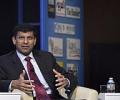
Industrial countries cannot at this point wash their hands off developing economises and say we will do what we need to, and you do the adjustment you need to, says RBI Governor.
The US Fed interest rate decision, inflation data and FIIs are the key factors that are expected to drive stock markets this week, analysts said. Global trends will also be tracked by investors for further cues, they added. "The Indian stock market's future trajectory will be influenced by a blend of global and domestic factors.
